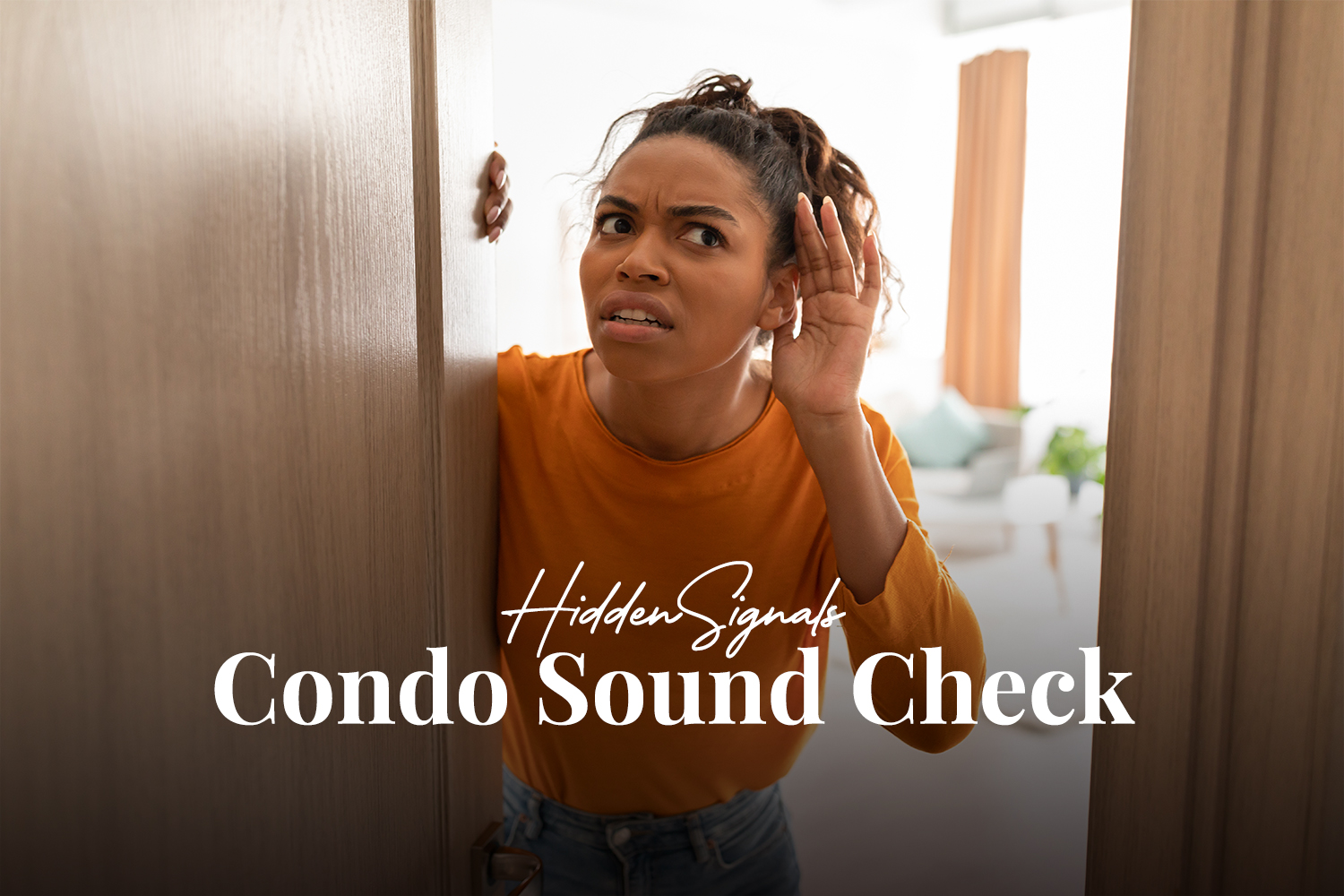
Is your condo trying to speak to you? Sometimes, the creaks, clanks, and hisses hiding behind walls carry important messages. Many odd sounds are harmless, but some can point to plumbing, structural, or even safety problems. Here’s a guide to common condo noises and what they might mean if you hear them.
Creaking Floors or Wood:
Wood floors and framing can creak as a natural part of settling or temperature changes. However, persistent or loud creaks – especially in identical spots or when humidity changes – could signal shifting floor beams or structural wear, which may need inspection before resale or renovation.
Pipes That Clang, Bang or Rattle:
Noisy pipes often point to plumbing issues. Common causes include trapped air in the lines, loose pipe straps, or high water pressure. Loose pipes can bang against walls, especially when HVAC or water systems start up. Such noise may seem minor, but over time, vibration can damage pipe supports or cause leaks.
Dripping or Water Sounds from Walls or Ceilings:
If you hear dripping with no visible water source, it could point to a hidden leak – possibly a cracked pipe or condensation build-up inside walls, ceilings or near HVAC ducts. Watch out for water stains, mold or musty odours, and consider professional inspection if the sound persists.
Hissing or Whistling Near Appliances or Gas Lines:
A steady hissing or whistling sound close to gas appliances, meters, or gas lines can be a warning sign of a gas leak – especially if accompanied by a sulphur or “rotten-egg” smell. Gas leaks are dangerous; if you suspect one, leave immediately and contact your gas provider or emergency services from a safe distance.
Odd Electrical Buzzing or Flickering Lights:
Noise from outlets, circuit boxes, or appliances – especially buzzing or crackling – may indicate loose wiring or overloaded circuits. This can be a fire hazard and should be checked by a licensed electrician as soon as possible.
Air Whistles Around Windows or Doors:
If you hear whistling around windows or doors, it often signals gaps or poor seals that let in drafts. Not only does this allow outside noise in, but it can reduce energy efficiency. Tightening seals or installing weather-stripping can restore comfort – and may help if you plan to sell.
Hearing strange noises doesn’t automatically mean disaster – but when sounds persist, change, or come with other signs (like odours, stains or moisture), it’s wise to investigate. As real estate professionals, the Schreder Brothers team encourages you to stay alert to these signals before buying or selling. If an inspection or a professional referral becomes necessary, we’re happy to help you navigate it.